
Shobhabazar Rajbari, Kolkata – History, Durga Puja & How to Reach
Shobhabazar Rajbari is one of the most iconic heritage landmarks in North Kolkata, famous for its grand architecture, aristocratic history and the centuries-old Shobhabazar Rajbari Durga Puja. Built under the patronage of Raja Nabakrishna Deb, the historic palace played an important role in the social and cultural life of Bengal.
The Rajbari is particularly renowned for its 1757 Durga Puja, which began shortly after the Battle of Plassey and became one of the most celebrated aristocratic family Pujas of Kolkata. British officials including Lord Clive and Warren Hastings were among the notable invitees.
Today, Shobhabazar Rajbari remains an important destination for travellers exploring Kolkata heritage, Bengali culture, traditional Durga Puja and historic North Kolkata.
Shobhabazar Rajbari History
The history of Shobhabazar Rajbari is closely connected with the rise of colonial Kolkata and the city’s Bengali aristocracy. Raja Nabakrishna Deb became an influential figure in 18th-century Bengal and was closely associated with the British administration.
The Rajbari became a major centre of social and cultural activity. Its magnificent courtyards hosted important gatherings, celebrations and cultural events, helping establish Shobhabazar as one of the prominent aristocratic neighbourhoods of old Kolkata.
West Bengal Tourism identifies the present Shobhabazar Rajbari at 33R/1A, Raja Naba Krishna Street as a Grade I heritage building, with an architectural character combining Hindu, Moorish and colonial traditions.
Shobhabazar Rajbari Durga Puja
The biggest attraction of Shobhabazar Rajbari is its historic Durga Puja, traditionally traced to 1757. Raja Nabakrishna Deb organised the Puja on a grand scale following the British victory at the Battle of Plassey.
The celebration became an important social occasion where Bengali aristocrats and prominent British officials could meet. Lord Clive and Warren Hastings are traditionally recorded among the invitees.
Unlike modern theme-based Durga Puja celebrations, the Shobhabazar family Puja continues to preserve its traditional character. During Durga Puja, the historic palace courtyards attract visitors interested in Kolkata’s Bonedi Bari Puja, heritage architecture and Bengali rituals.
Two Shobhabazar Rajbari Durga Pujas
The Shobhabazar royal family eventually divided into two branches, and today two separate family Durga Pujas are associated with the two historic mansions.
The original palace is associated with the descendants of Gopimohan Deb, while the other branch is associated with the descendants of Rajkrishna Deb, Nabakrishna Deb’s biological son. Both houses continue their traditional Durga Puja celebrations.
The two historic mansions are located close to each other and become especially interesting to visit during the Durga Puja festival.
Architecture of Shobhabazar Rajbari
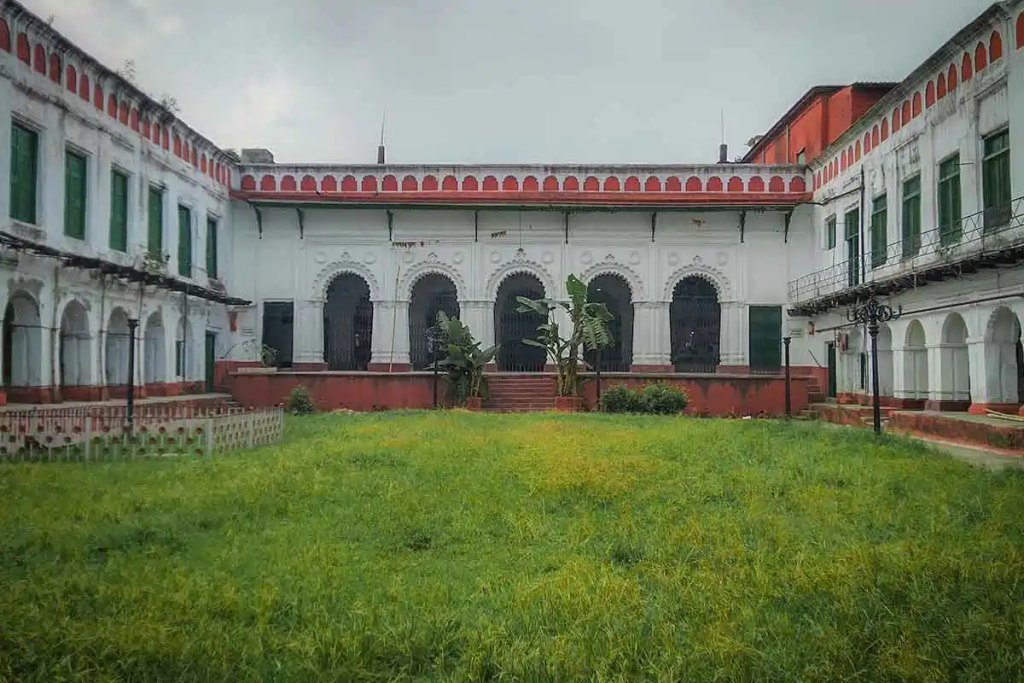
The architectural highlight of Shobhabazar Rajbari is its spacious Nat Mandap or Durga Dalan, an open courtyard surrounded by imposing columns and arches.
The palace combines elements of Hindu, Moorish and colonial architecture, reflecting the cultural environment of 18th-century Kolkata. Double-storey wings surround the central courtyard, while historic galleries and architectural details provide a glimpse into the lifestyle of Kolkata’s old aristocratic families.
For photographers and heritage enthusiasts, the Durga Dalan, columns, arches and old palace facade are among the most distinctive visual features of the Rajbari.
Swami Vivekananda’s Historic Reception
Shobhabazar Rajbari also has an important connection with Swami Vivekananda.
After his return from the Chicago Parliament of Religions, a civic reception was organised for Swami Vivekananda at the residence of Raja Radhakanta Deb Bahadur at Shobhabazar on 28 February 1897. Raja Binoy Krishna Deb Bahadur presided over the reception. Contemporary accounts describe a large gathering in the palace’s Nat Mandir.
This historic association adds another important layer to the cultural significance of Shobhabazar Rajbari.
Why Visit Shobhabazar Rajbari?
Shobhabazar Rajbari is worth visiting for:
- 18th-century Kolkata heritage
- Historic Shobhabazar Rajbari Durga Puja
- Traditional Bonedi Bari culture
- Historic Durga Dalan and Nat Mandap
- Hindu, Moorish and colonial architectural influences
- Connection with Raja Nabakrishna Deb
- Association with the history of colonial Kolkata
- Swami Vivekananda’s 1897 civic reception
- Exploring the historic neighbourhoods of North Kolkata
- Experiencing traditional Durga Puja during the festival season
Best Time to Visit Shobhabazar Rajbari
The most atmospheric time to experience Shobhabazar Rajbari is during Durga Puja, when the historic palace and its courtyards become the centre of traditional celebrations.
For a quieter heritage experience, visitors can explore the Shobhabazar area outside the festival period and combine the visit with other attractions in North Kolkata.
During Durga Puja, expect large crowds, particularly during the main festival days. Visitors should respect family rituals and follow any photography or access restrictions in the palace.
How to Reach Shobhabazar Rajbari
By Metro
The easiest way to reach Shobhabazar is by Kolkata Metro. Shobhabazar Metro Station is located in the North Kolkata area, from where visitors can continue by walking, auto-rickshaw or local transport depending on the exact palace entrance they wish to visit.
By Bus
Several Kolkata bus routes connect Shobhabazar with central and northern parts of the city. Local buses and autos are convenient for reaching Raja Nabakrishna Street.
By Taxi or Cab
App-based taxis and traditional yellow taxis can take visitors directly towards Raja Nabakrishna Street, Shobhabazar, Kolkata.
By Train
Visitors arriving by suburban railway can use nearby North Kolkata railway stations and continue by taxi, auto or local transport.
Shobhabazar Rajbari Location
Shobhabazar Rajbari is located on Raja Nabakrishna Street in Shobhabazar, North Kolkata, West Bengal. West Bengal Tourism lists the heritage Rajbari at 33R/1A, Raja Naba Krishna Street.
Because there are two historic Rajbari properties associated with the royal family, visitors should confirm which house or Durga Puja they intend to visit before travelling.
Shobhabazar Rajbari Visiting Tips
- Visit during Durga Puja for the most culturally significant experience.
- Wear comfortable clothing and footwear.
- Maintain respectful behaviour inside religious and heritage areas.
- Ask permission before photographing private interiors or rituals.
- Expect heavy crowds during Durga Puja.
- Combine the visit with a North Kolkata heritage walk.
- Explore nearby historic streets, temples, markets and traditional Bengali food establishments.
Shobhabazar Rajbari – Quick Facts
| Information | Details |
|---|---|
| Name | Shobhabazar Rajbari |
| Location | Raja Nabakrishna Street, Shobhabazar, Kolkata |
| Area | North Kolkata |
| Founder/Patron | Raja Nabakrishna Deb |
| Famous For | Shobhabazar Rajbari Durga Puja |
| Historic Puja | Started in 1757 |
| Main Architectural Feature | Durga Dalan / Nat Mandap |
| Heritage Style | Hindu, Moorish & Colonial influences |
| Best Time | Durga Puja |
| Ideal For | Heritage walks, history, architecture & culture |
Explore Shobhabazar Rajbari with a Kolkata Heritage Tour
A visit to Shobhabazar Rajbari becomes even more meaningful when combined with a guided North Kolkata heritage tour. Explore the old aristocratic mansions, narrow historic lanes, temples, traditional markets and cultural landmarks that reveal the fascinating story of old Calcutta.
For travellers looking beyond Kolkata’s famous monuments, Shobhabazar offers a chance to experience the city’s living heritage, Bengali traditions and aristocratic history in one of its most historic neighbourhoods.
Explore Bonedibari Durga Puja Parikrama Packages