
European Settlements In West Bengal Near Calcutta
Little Europe in Bengal is a fascinating journey through the European colonial heritage of West Bengal. This unique heritage tour takes you beyond Kolkata to the historic towns along the Hooghly River.
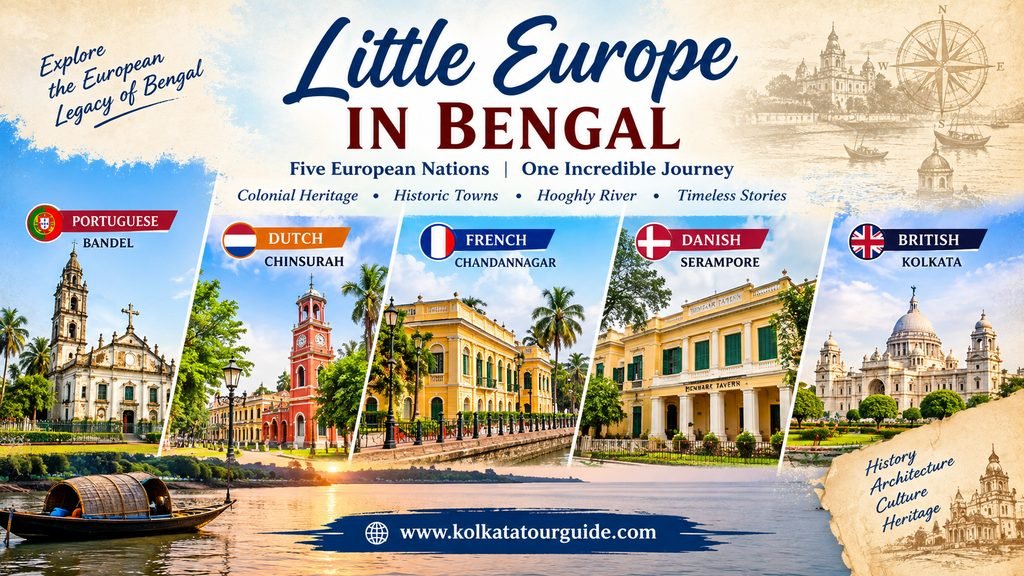
Explore the Portuguese heritage of Bandel, the Dutch legacy of Chinsurah, French Chandannagar, Danish Serampore, and British Kolkata. Each town has its own story, architecture, culture, and historic landmarks.
From the 17th century, European traders were drawn to Bengal because of its rich trade and natural resources. Bengal was famous for its silk, textiles, spices, pottery, and other valuable goods. European powers established trading settlements along the Hooghly River. Many of these historic sites can still be explored today.
Our Little Europe in Bengal Tour is ideal for travellers who enjoy history, architecture, culture, and heritage. Visit old churches, cemeteries, colonial buildings, riverfront areas, and historic neighbourhoods. Learn how European trading settlements grew and later declined in Bengal.
Portuguese Bengal – Bandel
Bandel, in Hooghly district, is one of the earliest European settlements in Bengal. The Portuguese established their presence in the region in the late 16th century. Bandel later became an important centre for trade and Christian missionary activity.
The most famous landmark is Bandel Church, also known as the Basilica of the Holy Rosary. It is one of the oldest Christian churches in West Bengal and an important part of the region’s Portuguese heritage.
Bandel Highlights
- Bandel Church
- Portuguese colonial history
- Hooghly River heritage
- Historic Christian traditions
- Old Portuguese settlement
Dutch Bengal – Chinsurah
Chinsurah, also known as Chuchura, is an important centre of Dutch heritage in Bengal. The Dutch established their trading settlement here in the early 17th century.
The town remained an important Dutch settlement until it was transferred to the British in the 19th century. Today, visitors can discover several historic sites linked to its Dutch past.
The Dutch Cemetery is one of the most interesting places to visit. Historic buildings and old settlement areas also provide a glimpse into the European history of Chinsurah.
Chinsurah Highlights
- Dutch Cemetery
- Historic Chinsurah
- Ghorir Mor (Clock Tower)
- Former Dutch settlement areas
- Heritage buildings
French Bengal – Chandannagar
Chandannagar, formerly known as Chandernagore, is one of the best places to experience French colonial heritage in Bengal. The French developed the town as an important trading settlement on the Hooghly River.
Chandannagar continued to have a French connection even after Indian independence. It later became part of India following a referendum and political agreement.
A walk along the famous Chandannagar Strand is a highlight of the experience. Visitors can also explore historic churches, colonial buildings, and the former French administrative centre.
Chandannagar Highlights
- Chandannagar Strand
- Sacred Heart Church
- Dupleix Palace and Museum
- French colonial architecture
- Hooghly River waterfront
Danish Bengal – Serampore
Serampore, formerly known as Frederiksnagore, was an important Danish settlement in Bengal. The Danish established their presence here in the 18th century.
The settlement remained under Danish control until 1845, when it was sold to the British East India Company.
The historic Denmark Tavern is one of Serampore’s most attractive heritage landmarks. This restored Danish-era building stands close to the Hooghly River.
Visitors can also explore St. Olav’s Church and Serampore College. Together, these sites reveal the town’s Danish, educational, and cultural heritage.
Serampore Highlights
- Denmark Tavern
- Serampore College
- St. Olav’s Church
- Danish colonial heritage
- Hooghly River promenade
- Historic European architecture
British Bengal – Kolkata
The final chapter of the Little Europe in Bengal journey takes you to Kolkata. Formerly known as Calcutta, Kolkata became one of the most important cities of British India.
The city was the capital of British India until 1911. Its historic streets still feature grand colonial buildings, churches, memorials, administrative offices, and commercial landmarks.
Explore the architectural legacy of the British period through famous landmarks and historic neighbourhoods across central Kolkata.
Kolkata Highlights
- Victoria Memorial
- St. Paul’s Cathedral
- Fort William
- Writers’ Building
- Colonial-era streets
- Historic British architecture
Stay in a Historic Heritage Property
Make your European heritage tour in Bengal even more memorable with a stay at the historic Denmark Tavern and Hotel in Serampore.
The restored Danish heritage building stands beside the Hooghly River. It offers travellers a chance to experience the atmosphere of historic Serampore.
Another option is Itachuna Rajbari, a historic palace associated with the Kundu family. Staying at this heritage property offers a different experience of Bengal’s traditional architecture and royal history.
Experience the European Heritage of Bengal
The Little Europe in Bengal Tour from Kolkata is more than a sightseeing experience. It is a journey through the history of European settlements in Bengal.
Travel through Bandel, Chinsurah, Chandannagar, Serampore, and Kolkata. Discover the Portuguese, Dutch, French, Danish, and British chapters of Bengal’s history.
Learn about European traders, missionaries, administrators, and local communities. See how these settlements influenced Bengal’s trade, architecture, education, religion, and culture.
This European colonial heritage tour in Bengal is perfect for history lovers, heritage travellers, photographers, architecture enthusiasts, and cultural explorers.
Discover a lesser-known side of Bengal with our Little Europe in Bengal Tour and experience the fascinating European heritage of the Hooghly River towns.